When To Book A Land And Sea Day In St Lucia: Season, Rain And Crowds
The month you pick shapes the sea, the snorkelling and the crowd levels on the dock. Here is what the seasons, the rainfall record and the cruise calendar actually say.
Short answer
December to April is the busiest and driest time, and the Tourism Authority calls December to May the best window for Soufriere, where these days go. Rainy season runs June to December and hurricane season June 1 to November 30. Island-wide rainfall peaks near 250 mm in October and dips near 65 mm in March.
The month you choose does more for a land and sea day in St Lucia than almost any other planning decision. The sea leg and the snorkel stop both depend on conditions on the west coast, the land stops sit around Soufriere in the island's southwest, and the number of cruise ships in port changes how busy the docks and the popular stops feel. Get the timing right and the same tour delivers a very different day.
The basics are simple enough. Average temperature on the island runs from 23 to 31 °C, sea temperature typically sits between 26 and 29 °C, and the west, Caribbean coast is the calmer, sheltered side of the island while the Atlantic side gets stronger trade winds. The St Lucia Land And Sea Tour selection covers boat days, catamaran days and road tours that all use the same stretch of coast, so the seasonal logic above applies to nearly all of them.
Which Months Are Best For A Land And Sea Day?
The Saint Lucia Tourism Authority names December to May as the best time to visit Soufriere, warm and sunny, and that window is also when the island's driest and busiest season, December to April, falls. If you want the strongest combination of settled weather and clear snorkelling water, the December to May stretch is the period to aim for.
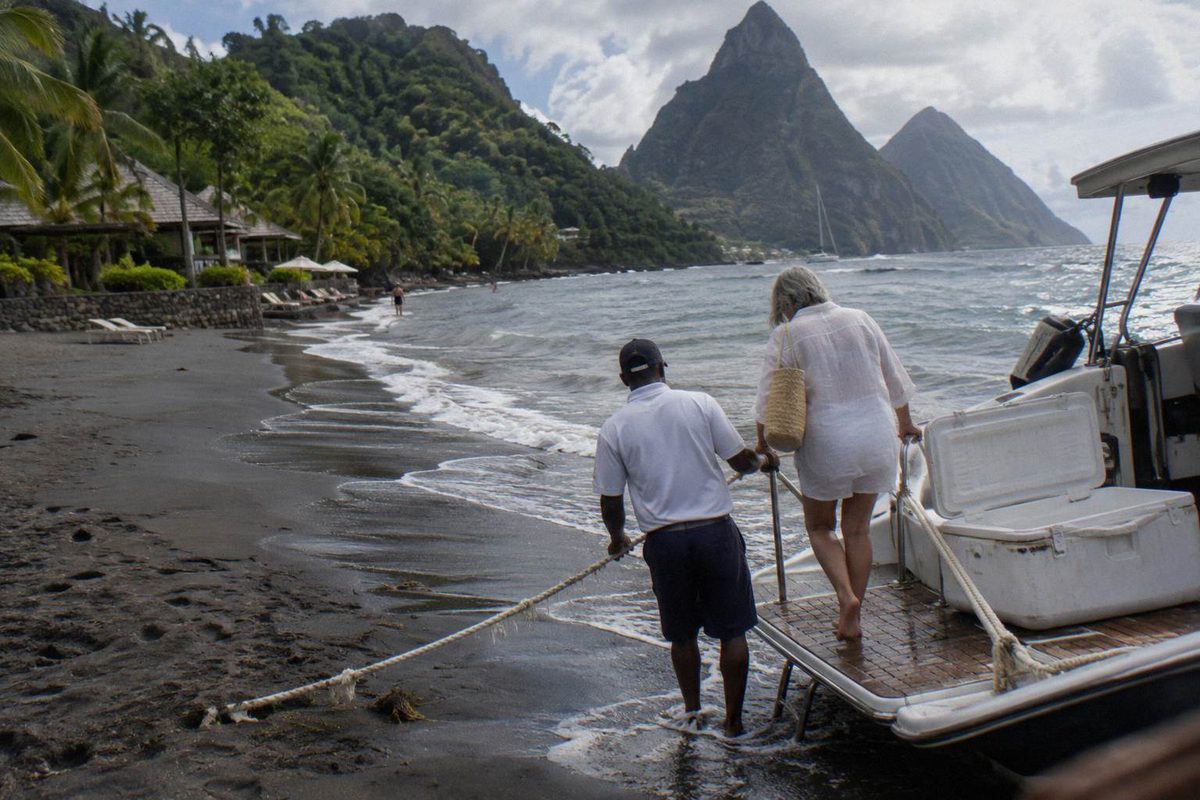
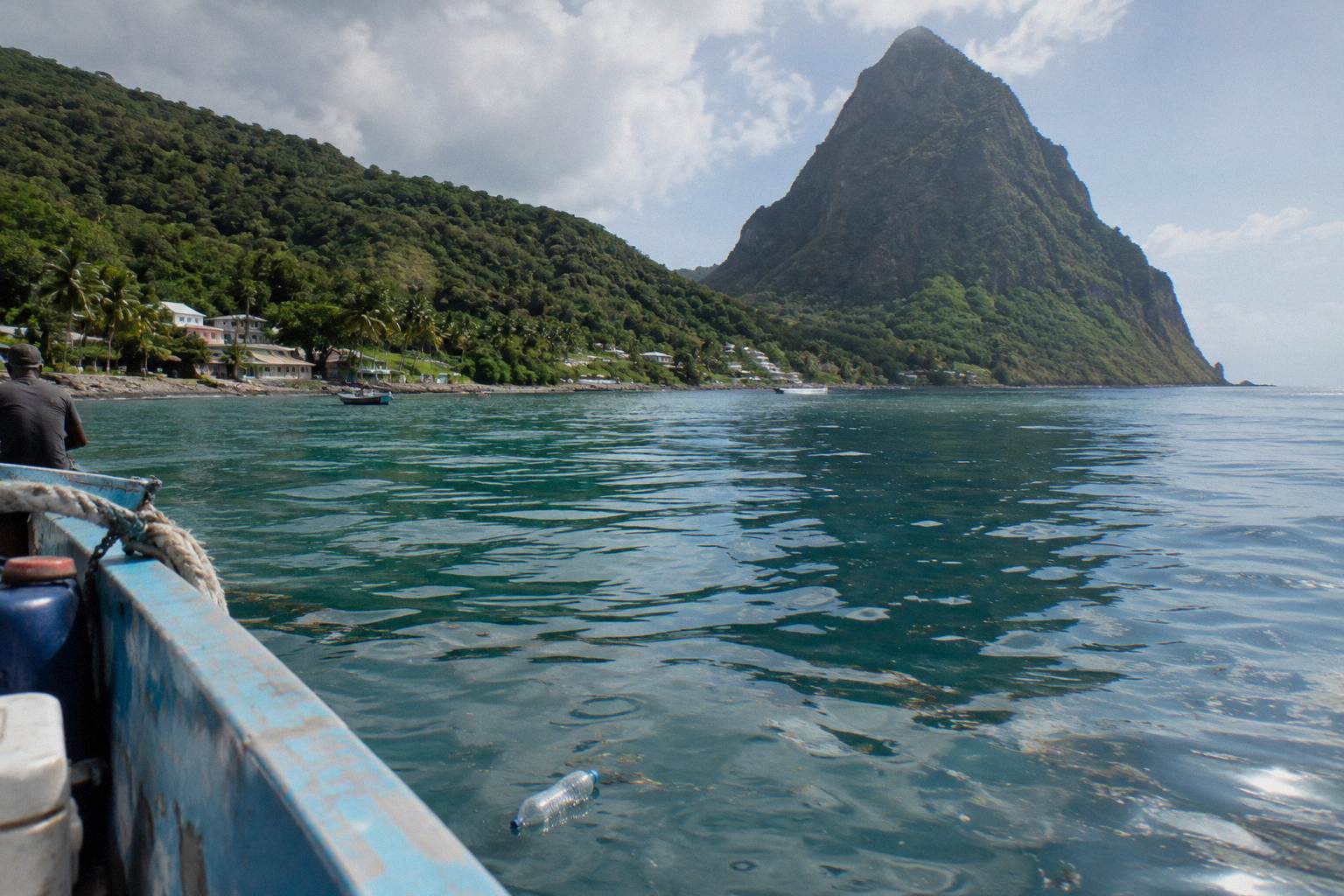
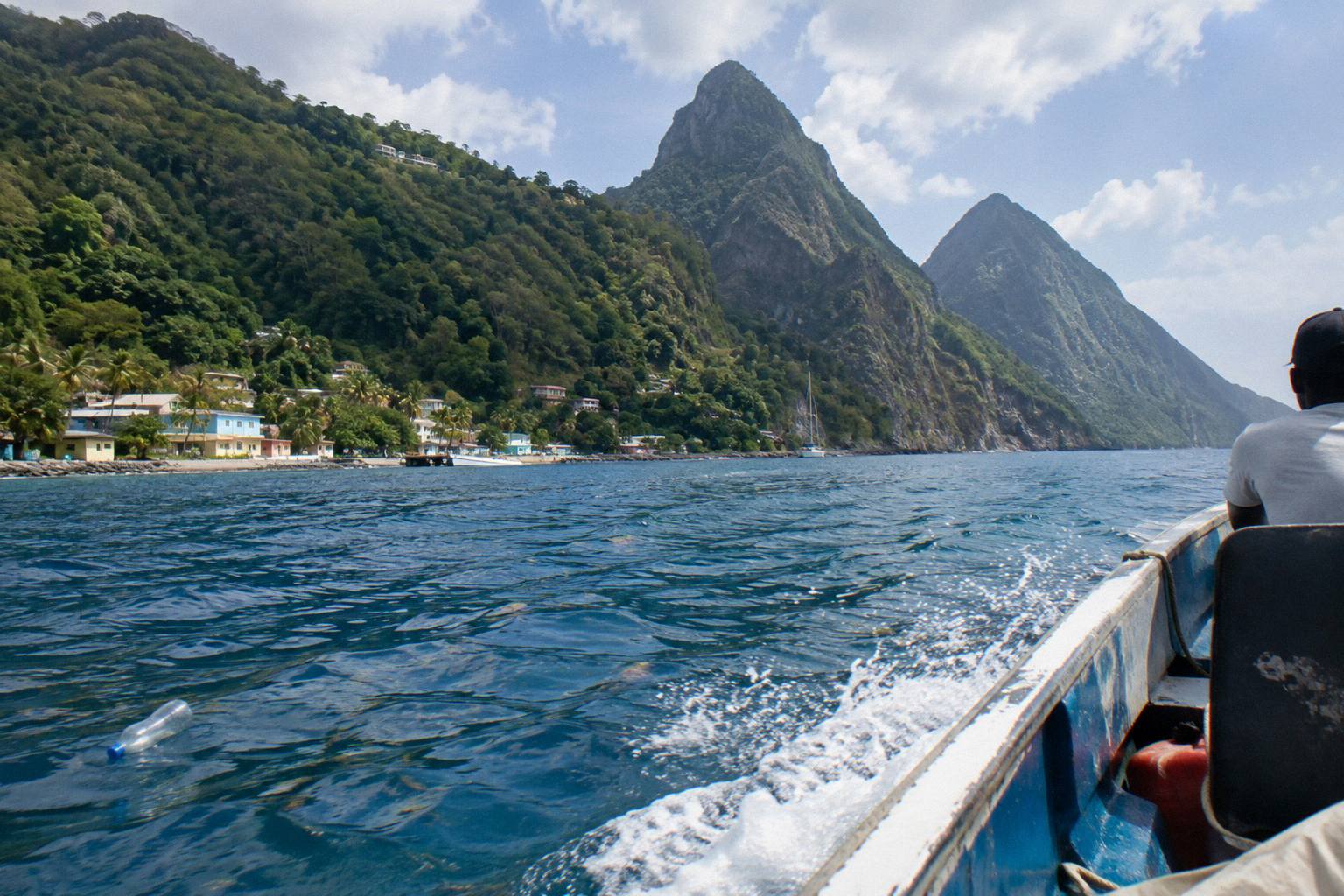
That recommendation matters here because Soufriere is the destination for nearly every day in this category. The town sits on the southwest coast beneath Gros Piton at 798 m and Petit Piton at 743 m, the pair that form a UNESCO World Heritage Site inscribed in 2004, and the boat legs of these tours travel the calmer west coast to reach it. December to May is also the period the Tourism Authority describes as the calmest and clearest season for the snorkelling beaches, which is worth weighing when the snorkel stop is a headline part of the day.
The trade-off is crowds and price. December to April is the busiest time on the island, which means fuller boats and busier stops at the signature sights. Some travellers treat that as a fair exchange for reliable conditions. Others accept a higher chance of a shower in exchange for quieter docks, and the shoulder logic of May and June, covered later here, exists exactly for that kind of traveller.
It helps to be concrete about what the day actually contains. The inclusions on a typical land and sea day usually cover the boat leg, a snorkel stop, Sulphur Springs, Toraille Waterfall and lunch, so a weather-sensitive mix of sea time and road time. The Tourism Authority calls Sulphur Springs 'the Caribbean's only drive-in volcano', and the mud bath stop there is open air, which is another reason the season matters more than it would for a purely indoor excursion.
How Much Rain Falls Each Month?
Island-wide monthly rainfall, from a non-official climate data summary, runs from about 65 mm in March to about 250 mm in October, with a wet spell from July through November where every month tops 200 mm. February and March are the driest pair, and December through April stays comparatively dry. These figures describe the whole island, not any single stop.
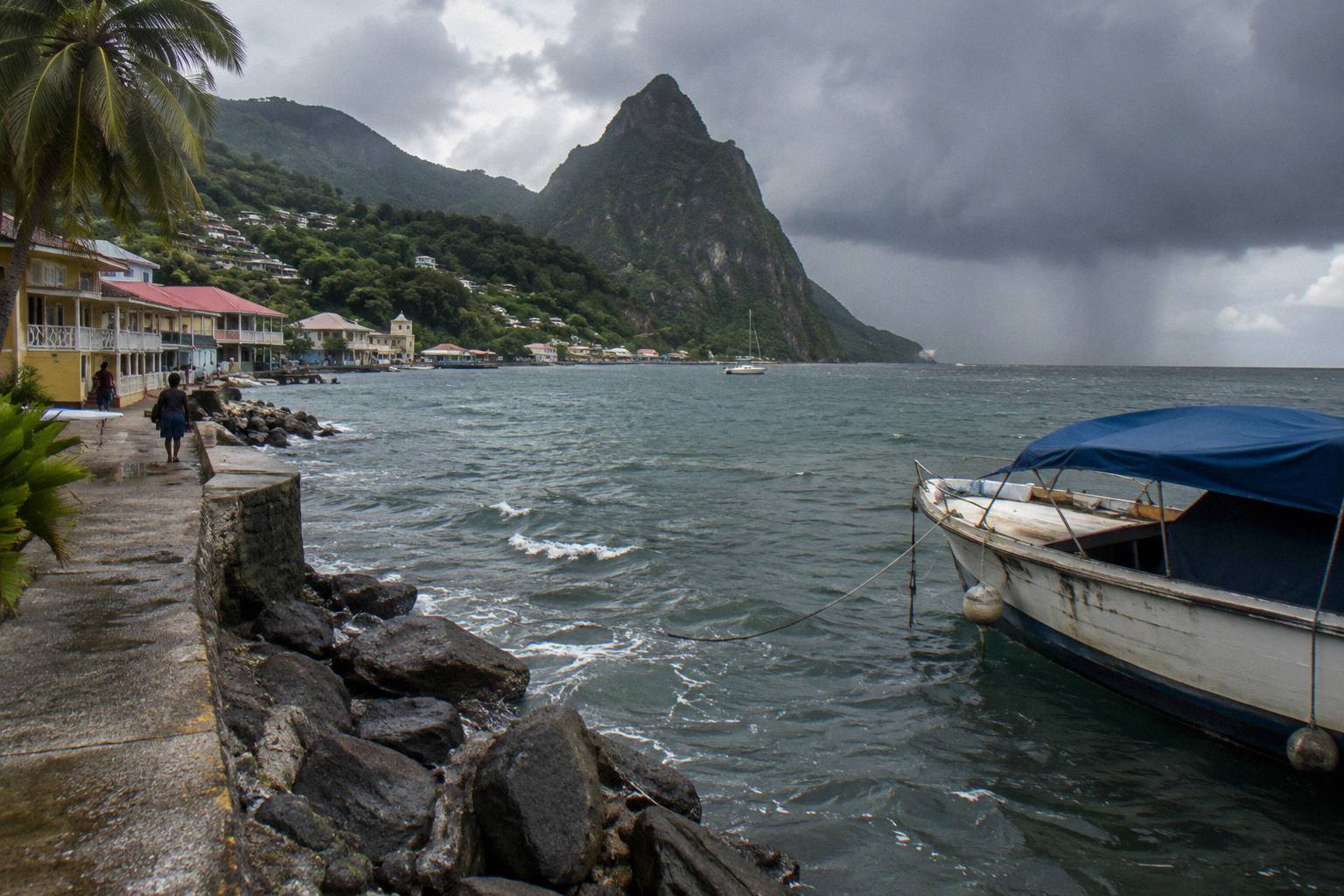
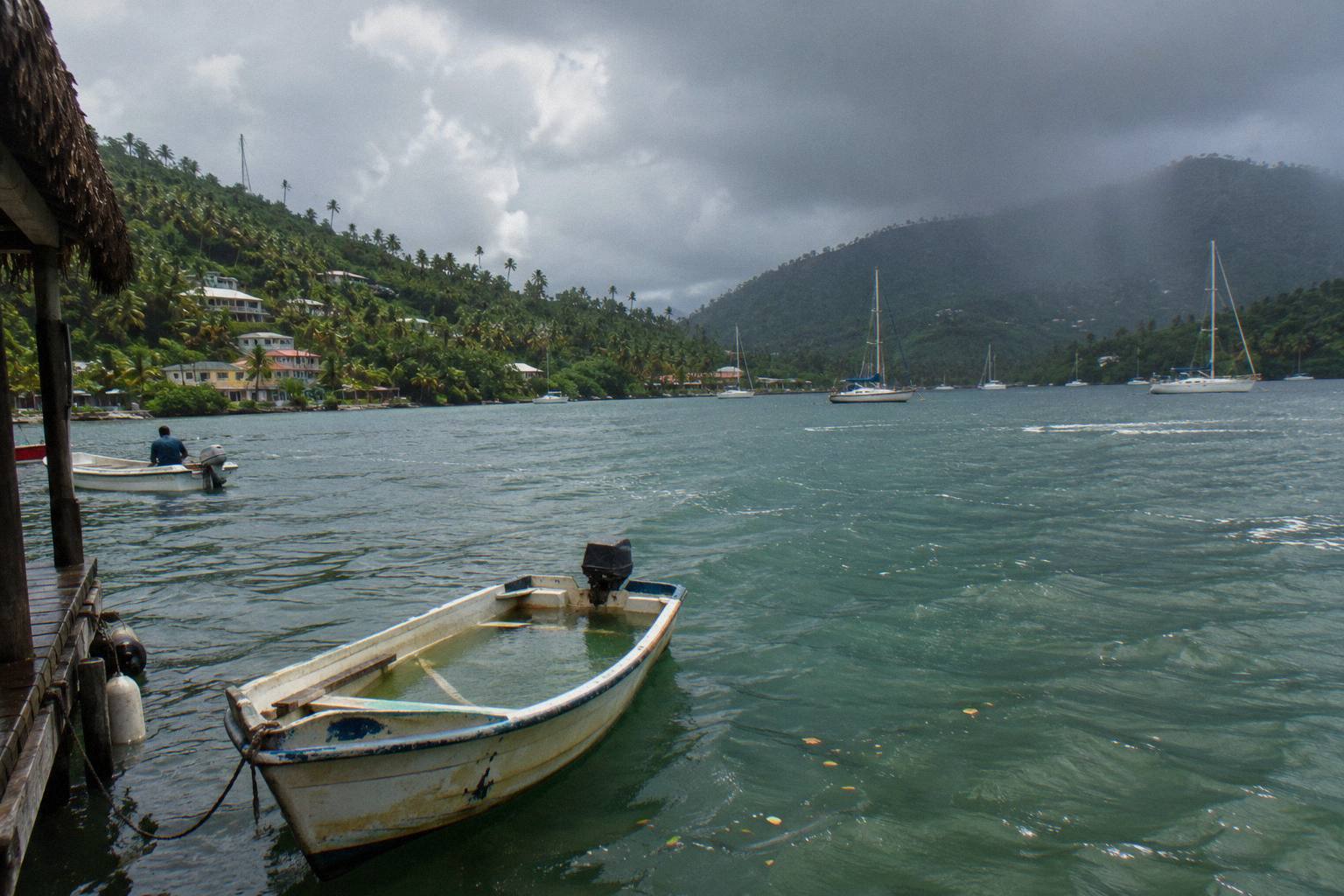
The table shows the full pattern. Treat it as a planning range, not a forecast: no month has zero rain, and the rainy season is characterised by the Tourism Authority as showers that are usually brief, with more rain falling in the rainforest than on the coast. A land and sea day spends its time on the coast and at sea, which is the drier side of that split.
| Month | Island-wide rainfall (mm) | Reading |
|---|---|---|
| January | 105 | Dry season, busy |
| February | 70 | Dry season, busy |
| March | 65 | Driest month in the record |
| April | 85 | Dry season, busy |
| May | 105 | Shoulder, drier side |
| June | 155 | Rainy season begins |
| July | 200 | Wet, quieter |
| August | 220 | Wet, quieter |
| September | 205 | Peak hurricane overlap |
| October | 250 | Wettest month in the record |
| November | 235 | Wet, tail of hurricane season |
| December | 130 | Drying out, busiest season returns |
Two caveats belong next to those numbers. First, this is a climate data summary, not an official measurement series, and it applies to the island as a whole rather than to Soufriere, Marigot Bay or any snorkel beach. Second, rain does not automatically cancel a day: the Tourism Authority notes that showers in the rainy season are usually brief. What a wet month changes is the odds, and the odds are what you are buying when you pick a month.
If you are matching a month to a tour, the three days below are the natural starting points: the most-reviewed shared day in the set, the big catamaran alternative, and a small-group speedboat-style option.
What About Hurricane Season?
The Atlantic hurricane season runs June 1 to November 30, with a 1991 to 2020 average of 14 named storms, 7 hurricanes and 3 major hurricanes per the National Hurricane Center. It overlaps the island's June to December rainy season. St Lucia sits in the hurricane belt's southern edge, and the season's peak months, August to October, are also the wettest in the rainfall record.
The practical reading is that hurricane season does not mean hurricanes over St Lucia every week; the averages describe the whole Atlantic basin, and most named storms never touch the island. What it does mean is that September and October carry the highest combined risk of disruption, the heaviest rain in the monthly record, and the quietest visitor numbers of the year. Some travellers book those months deliberately for exactly that quietness, accepting the weather risk.
There are two protections worth knowing about before you book anything in this window. The Tourism Authority lets travellers cancel or reschedule before arrival at no cost, and individual operators carry their own cancellation terms on their booking pages. The cancellation, weather and late ship rules for a land and sea day are worth reading in full before you commit to a peak-season-risk date.
The difference between tour bookings matters here more than in the dry season. The Edmund Tours Land And Sea Day, from US$125 per person and rated 4.7 from 2,085 reviews, carries free cancellation up to 24 hours before, as do almost all the days in this category. The one exception among the listed trips is the Island Routes Soufriere Adventure Cruise, from US$153 per person and rated 4.3 from 76 reviews, which is all sales final with no refund. Booking a no-refund tour inside hurricane season is a materially different decision from booking a 24-hour-cancellation tour in the same window, and you should make it knowing that.
When Is The Cruise Season And Does It Change Anything?
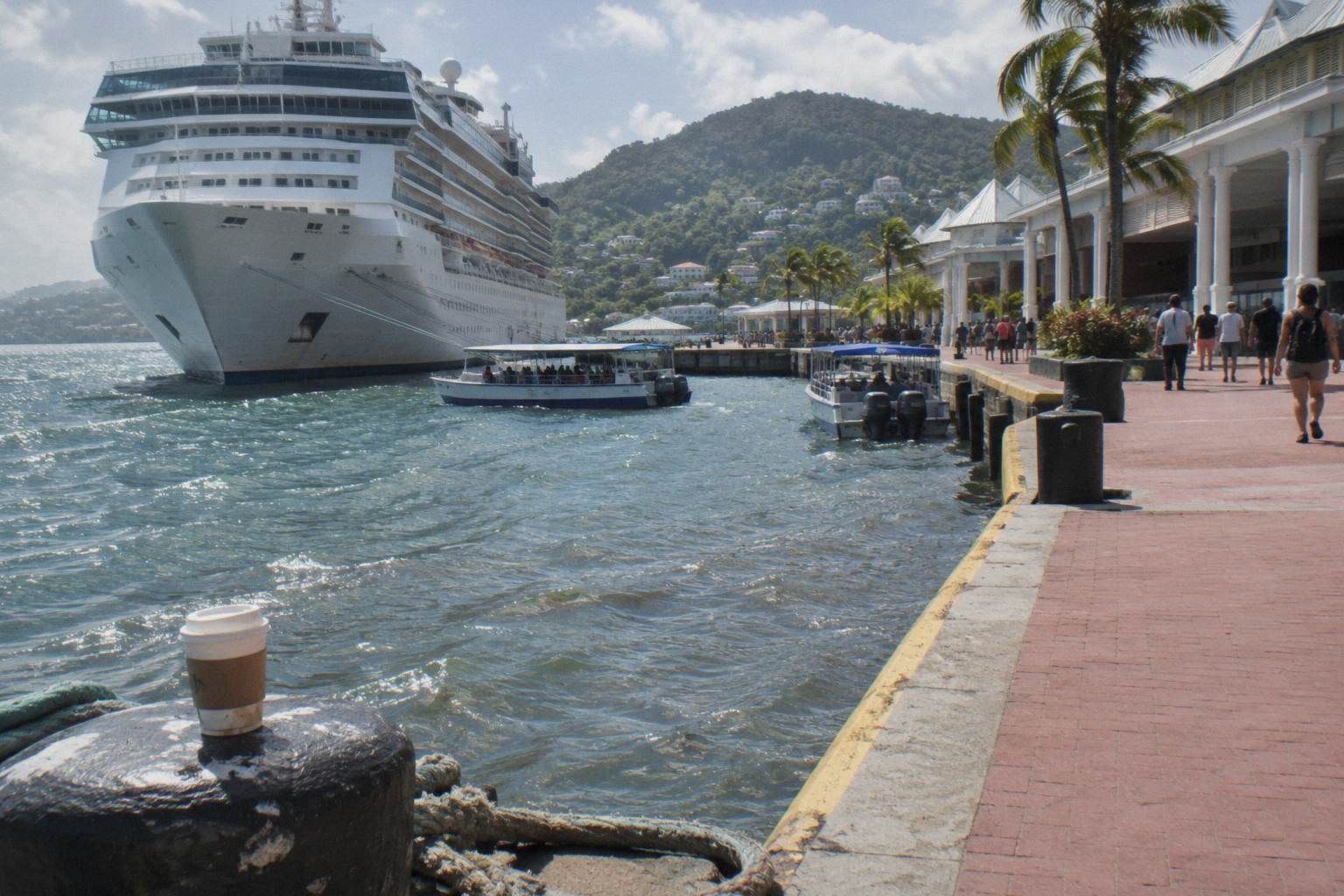
Cruise season runs October to April, and in that window up to five ships can call at Port Castries in one day, per the Saint Lucia Air and Sea Ports Authority. Port Castries has two cruise complexes, Pointe Seraphine with dedicated cruise berths and La Place Carenage near the Queen Elizabeth II docks. More ships mean busier shared tours and busier stops.
The overlap is the key fact: cruise season sits almost exactly on top of the dry season. December to April gives you the best weather and the most cruise passengers, so the trade is real and unavoidable at the peak. The effect lands in two places. Shared boat days out of Rodney Bay Marina and Castries fill with a mix of hotel guests and cruise passengers, and the headline stops around Soufriere, Sulphur Springs, Toraille Waterfall and the snorkel beaches, see more vehicles and boats arriving in the middle of the day.
| Period | Cruise ships | Weather character | Crowd character |
|---|---|---|---|
| December to April | Peak season, up to five ships a day | Driest, busiest | Full boats, busy stops |
| May to June | Shoulder | Drying, then early rains | Thinning crowds |
| July to November | Quietest | Wettest months, hurricane overlap | Quietest of the year |
Only four of the tours listed state cruise-port pickup: the Sea Spray Cruise-Ship Catamaran Day, the St Lucia Taxi Service van day, the Captain Cliff private speedboat day and the Cool Vibes private day. If you are a cruise passenger rather than a hotel guest, the land and sea day from a cruise ship lays out that side of the decision, including why you should check the operator's pickup and return times against your ship's own schedule and all-aboard time rather than relying on any published time.
Hotel-based travellers have more room to dodge the cruise-day crowds even inside the peak. Most shared days out of Rodney Bay Marina run on set schedules regardless of ship calls, but a midweek date with fewer ships in port will feel different from a five-ship day, and the port authority's schedule is public information you can check while planning. No source supports a precise crowd count per month at any stop, so treat this as a direction, not a measurement.
Are The Shoulder Months A Better Deal?
May, June and November sit between the two poles: rainfall in those months runs about 105, 155 and 235 mm island-wide, crowds thin after April, and the Tourism Authority's December to May window for Soufriere still covers May. May is the strongest shoulder pick, drier than anything after it and past the busiest stretch of cruise traffic.
May is the month that suits a first-time visitor who wants a compromise. It sits inside the Tourism Authority's recommended December to May window for the southwest, its island-wide rainfall of about 105 mm matches January's, and the December to April crush has eased. June tilts the balance: the rainy season the Tourism Authority puts at June to December begins, rainfall climbs to about 155 mm, and you are trading more weather risk for even quieter stops.
November is the bolder call. It is still wet, about 235 mm island-wide, and hurricane season runs to November 30, but the cruise season has restarted and the December crowds have not yet arrived. Travellers who book November should lean hard on the cancellation terms of whichever day they choose, and be aware that one premium option, the Island Routes catamaran, is all sales final. On a month like November, a 24-hour free-cancellation booking is not a nicety, it is part of the plan.
The snorkelling side of the shoulder question is where the seasons genuinely bite. The Tourism Authority describes December to May as the calmest and clearest season for the island's snorkelling beaches, and the snorkelling stops on a land and sea day are the parts of the itinerary most sensitive to water conditions. A mud bath works in the rain. A snorkel stop over a reef works best in clear, settled water, which is the single strongest argument for the dry-season window if underwater time is your priority.
The Sea Spray Full-Day Catamaran To Soufriere is the natural example of a day whose appeal rises in the dry months. It runs about 8 hours from Rodney Bay Marina, rated 4.6 from 708 reviews, from US$145 per person, with a swim stop at Anse Cochon, a cruise past Marigot Bay, Toraille Waterfall, Sulphur Springs and a creole lunch, and free cancellation up to 24 hours before. A full day built around a swim stop is the kind of itinerary where a clear-water month pays off most.
How Far Ahead Should You Book?
No published figure states how many weeks ahead a St Lucia land and sea day sells out, so no week count is printed here. What the booking data does show is the cancellation structure: almost every day among the listed tours carries free cancellation up to 24 hours before, one is all sales final, and one lists its terms only on its booking page. That structure, not a week count, is how you should time the booking.
The strategy follows directly. For dry-season dates, December to April, book early to secure the date and the tour you want, because demand is at its peak and shared boats have fixed capacity: the Edmund Tours day caps bookings at 15 travelers, and Julian Boat Tours' two speedboats carry a combined maximum of 30 guests. The 24-hour free cancellation on both means an early booking is close to costless to move. For rainy-season dates, the same logic applies with more force, since flexibility is worth more when weather risk is higher.
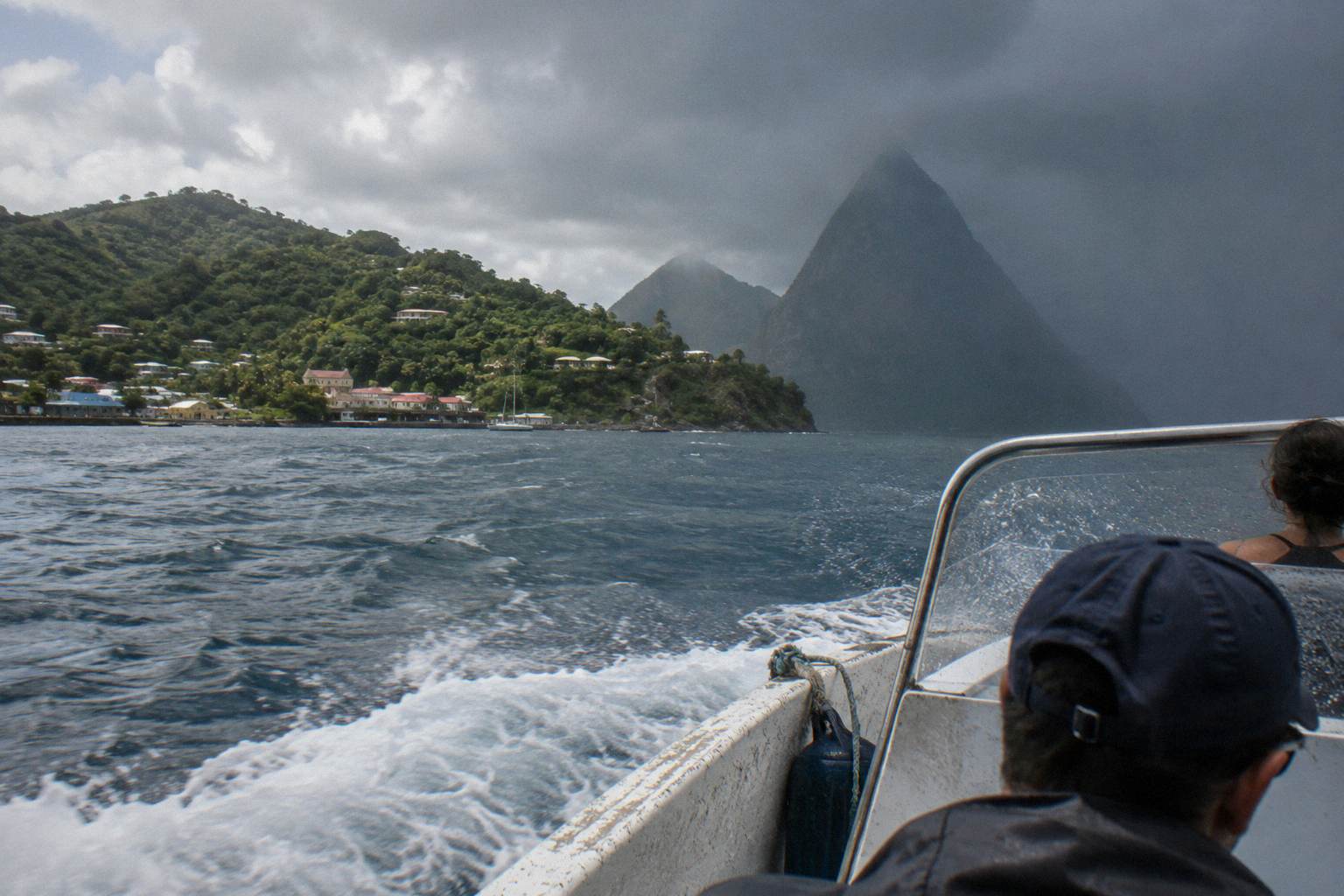
The exceptions deserve their own sentence or two. The Island Routes Soufriere Adventure Cruise is all sales final, no refund, at any time of year, so it should be booked only when your travel plans are certain, and ideally not for a September or October date. The Safi Tours rainforest-hike day and the Lucian Adventures speedboat day publish little confirmed detail on their booking pages; ask the operator about terms before booking either in any season. And private days behave differently from shared ones: their calendars are small, so a dry-season Saturday for a private boat can be the scarcest commodity of all.
| Booking situation | Cancellation terms to check | Timing approach |
|---|---|---|
| Dry season, shared day | Free cancellation up to 24 hours before | Book early, adjust later |
| Dry season, private day | Free cancellation up to 24 hours before | Book earliest; few slots exist |
| Rainy or hurricane season | Free cancellation up to 24 hours before | Book early, keep flexibility |
| Island Routes catamaran | All sales final, no refund | Book only when plans are certain |
| Safi or Lucian Adventures | On the booking page; ask the operator | Confirm terms before booking |
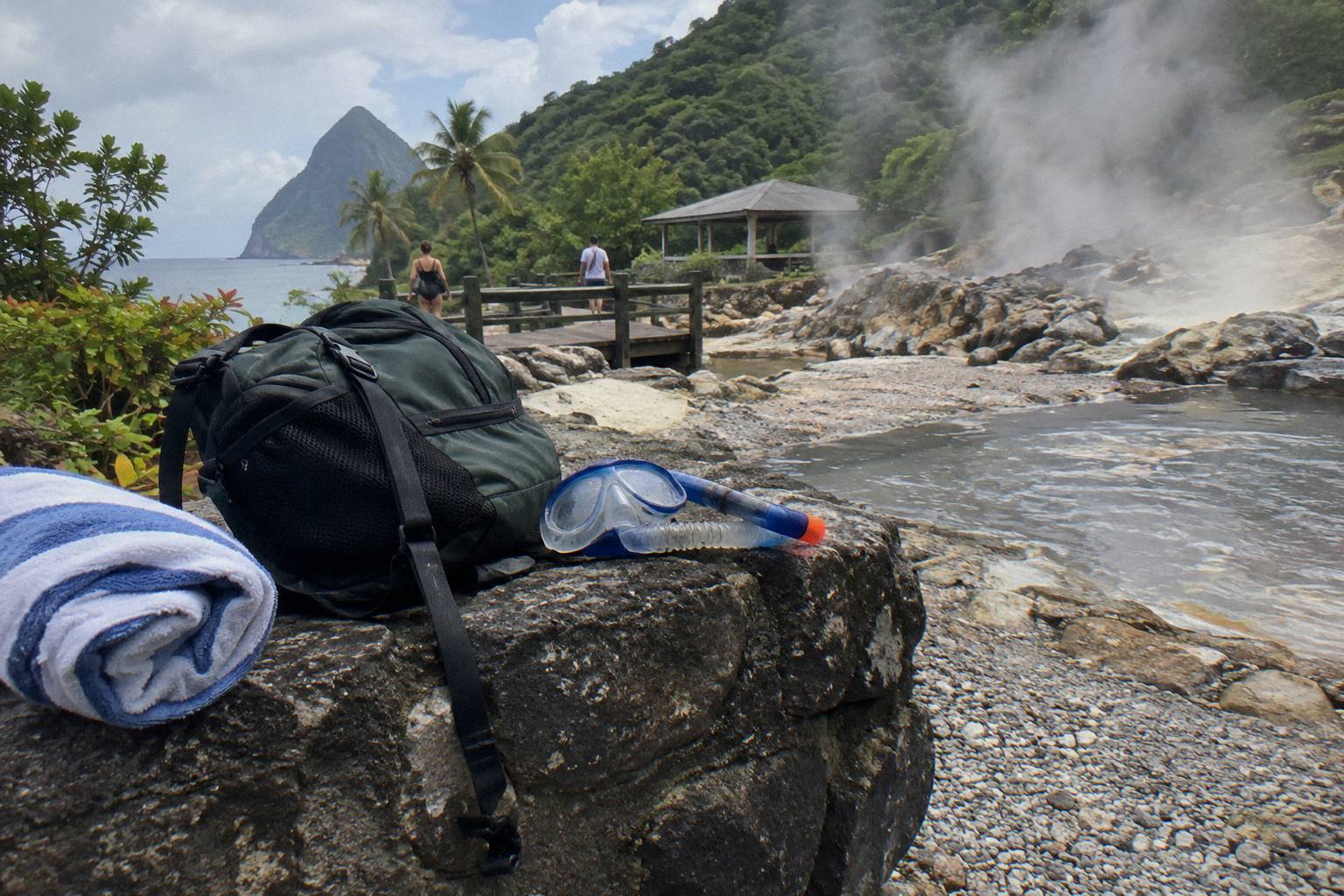
One more timing nuance: the month also changes what you pack, and packing is part of the booking decision in a small way. The Tourism Authority suggests comfortable shoes, swimwear and a towel for Sulphur Springs, and towels are not included on several of the listed days, including the Marlan's and Infinity shared tours. The fuller packing picture, including the difference fins make for a strong snorkel day, is in the guide to what to wear and bring on a St Lucia land and sea day.
What Happens If The Weather Turns On The Day?
Weather calls belong to the operator, not to you. Each tour's booking data carries its own cancellation terms, and Sea Spray's own site says it offers a reschedule or a cancellation at no charge on a weather cancellation, a policy attributable to that operator alone. No operator's terms promise a refund simply because it rains.
This is why the cancellation column in the tables above matters more than it looks. The gap between a day with 24-hour free cancellation and one with all sales final is widest exactly when the weather question is live, which in St Lucia means the July to November stretch. Sea Spray's weather policy, reschedule or cancel at no charge, applies to its own tours and should not be assumed for anyone else's. For every other operator, the terms on the booking page are the ones that govern, and reading them before booking is the whole job.
The rain itself is often less dramatic than the word season suggests. The Tourism Authority characterises the rainy season's showers as usually brief, with more rain falling in the rainforest interior than on the coast, and a land and sea day lives on the coast. The stops that suffer most in steady rain are the view stops and the snorkel; the volcano, the mud bath and lunch carry on. The seasickness question on the west-coast boat ride is a related seasonal concern, since the sea state, not the rainfall, is what a rough day actually delivers.
For cruise passengers the stakes are slightly different, and the rules are strict about what can be printed: no start time, return time or all-aboard promise exists. The operator confirms pickup and return times, and the traveller checks them against the ship's own schedule. If rough weather is in the forecast, that check becomes the most important five minutes of the planning process, and the guide to whether a land and sea tour gets you back to the ship on time covers the reasoning.
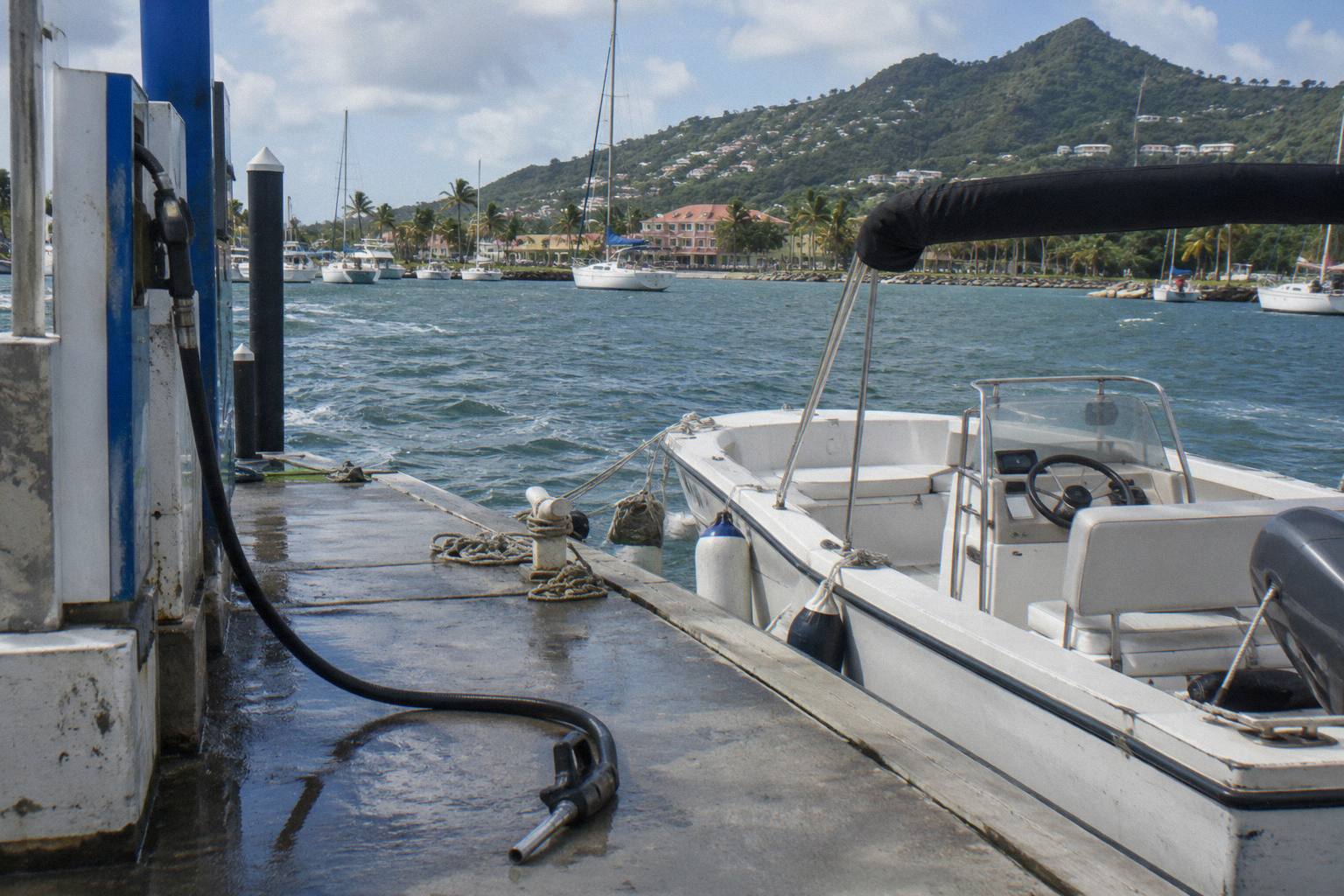
A private day is one way travellers manage weather risk, since the schedule can flex around conditions in ways a shared 30-guest day cannot. The Captain Cliff private speedboat day, rated 4.9 from 107 reviews and from US$260 with the booking page showing what the price covers for your party, runs 4 to 6 hours from the Castries ferry dock area with a taxi ashore for the mud bath and waterfall, free cancellation up to 24 hours before, though lunch at about US$15 per person, the Sulphur Springs and waterfall fees, gratuities and a fuel surcharge are not included.
Matching The Season To The Tour You Want
Pick December to April for the safest combination of dry weather, clear snorkelling and full schedules, accepting the biggest crowds. Pick May for the best balance. Pick July to November for quiet docks and lower demand, accepting the wettest months of the record and hurricane-season overlap, and lean on the 24-hour free-cancellation terms most days carry.
The tour you choose tilts that decision. A day whose centre of gravity is a catamaran cruise with a swim stop wants the calmest water months. A shorter, road-weighted day with a beach snorkel, like the taxi-van option, is less exposed to sea conditions and more tolerant of a shoulder date. A premium all-inclusive with no refund wants a date you are certain about, full stop. And a small-group speedboat day splits the difference: shorter on the water than a full-day catamaran, but still a boat day at heart.
| Tour type covered here | Season it suits best | Why |
|---|---|---|
| Full-day catamaran, about 8 hours | December to May | Long day built around a swim stop and clear water |
| Small-group boat day, about 5 to 6 hours | December to June | Sea time plus land stops, manageable in mixed conditions |
| Road tour with a beach snorkel | Year-round | No boat leg stated, least exposed to sea state |
| Private speedboat, 4 to 6 hours | December to November | Flexible schedule, 24-hour free cancellation |
| All sales final catamaran | Any month, certain plans | No refund window; book only when fixed |
For a dry-season date with the sea leg as the priority, the Julian Boat Tours all-inclusive day is a strong fit: a small-group boat-plus-land day from Rodney Bay Marina and the ferry dock meeting points, rated 4.9 from 498 reviews, from US$175 per person, with a cruise past Marigot Bay, a snorkel stop at Sugar Beach, Toraille Waterfall, Sulphur Springs and lunch with drinks, about five to six hours, youngest age 5, and free cancellation up to 24 hours before. In the calmer months that itinerary gets the most from the water.
The last piece of the seasonal picture is money rather than weather. The Eastern Caribbean dollar is pegged at EC$2.70 to US$1, US dollars are widely accepted by hotels, restaurants, tour operators and taxis, and change often comes back in EC dollars. Tipping at about 10 to 12 percent is customary and not automatically added to most bills, and gratuities are listed as not included on a number of the days here, from the Sea Spray catamarans to the Captain Cliff private boats. No published crew-tip figure for a land and sea day exists, so budget it as you would a restaurant tip rather than hunting for a number nobody prints.
Whichever month you land on, the short version is this: the dry season buys conditions, the wet season buys quiet, May buys a bit of both, and the cancellation terms on the booking page are what make any of those choices safe to commit to. These three days cover the spread of formats and prices for a first booking.
Common Questions About When To Book A Land And Sea Day In St Lucia
What Is The Best Month For A Land And Sea Day In St Lucia?
The Tourism Authority names December to May as the best time to visit Soufriere, and December to April is the island's driest and busiest season. That window combines settled weather with the calmest, clearest snorkelling conditions, at the cost of the year's biggest crowds.
Does It Rain All Day In The Rainy Season?
No source supports that. The Tourism Authority describes rainy-season showers in June to December as usually brief, with more rain falling in the rainforest than on the coast, where these tours spend their day. Island-wide rainfall still peaks near 250 mm in October, so the odds of a wet hour are real.
Should I Avoid Hurricane Season In St Lucia?
Hurricane season runs June 1 to November 30 with an Atlantic average of 14 named storms, 7 hurricanes and 3 major hurricanes. Most storms never reach the island, but August to October combines the wettest months with peak season risk. If you book that window, prefer days with free cancellation up to 24 hours before.
How Far In Advance Should I Book?
No published figure gives a weeks-ahead number for these tours, so none is printed here. In the dry season, book early to secure your date, since shared days have fixed capacity, and rely on the 24-hour free cancellation most carry if plans change. Private days have the fewest slots and deserve the earliest booking.
Do Cruise Ships Make The Tours More Crowded?
Yes, in season. Cruise season runs October to April and up to five ships can call at Port Castries in one day, which fills shared boats and the popular Soufriere stops. Travelling outside that window, or on days with fewer ships in port, thins the crowds.
Can I Cancel If The Weather Is Bad?
It depends on the tour. Almost every day among the listed tours carries free cancellation up to 24 hours before, while the Island Routes catamaran is all sales final. Sea Spray's own site offers a reschedule or cancellation at no charge on a weather cancellation; check each booking page for the terms that apply to your day.