The West Coast Route From Rodney Bay To Soufriere, By Sea And Land
The west coast is the side of Saint Lucia almost every boat tour runs on, and almost every one of them is heading for the same place: Soufriere, under the Pitons. Here is what the route passes, stop by stop, and which tours list what.
Short answer
The standard route runs from Rodney Bay Marina or Castries down the Caribbean coast, past Marigot Bay, Anse La Raye and Canaries, to the Pitons coast and Soufriere, where the land leg takes in Sulphur Springs, Toraille Waterfall and lunch. Shared days run from US$120, private boats from US$250.
Saint Lucia's west coast is the calm, sheltered side of the island, and it is where nearly every boat tour in the country spends its day. The route is not a mystery: boats leave Rodney Bay Marina or the Castries waterfront, track south along the Caribbean shore, and aim for Soufriere, the town sitting under Gros Piton and Petit Piton on the southwest coast. The St Lucia Land And Sea Tour site exists because that single route is the backbone of the island's most popular day out, the combined sea-and-land excursion.
What varies between operators is everything else. Which bay you cruise past, whether the boat stops to snorkel or only slows for photos, how long you get in Soufriere, and whether the return leg is by sea or by road. The route is walked from top to bottom here, exactly as each tour's booking data lists it, so you can judge what you are paying for before you book.
What Does The West Coast Route From Rodney Bay To Soufriere Cover?
The route covers roughly the island's entire Caribbean shoreline between the north and the southwest: departure from Rodney Bay Marina or Castries, a southbound run along the sheltered west coast past Marigot Bay, Anse La Raye and Canaries, arrival on the Pitons coast at Soufriere, a land leg of volcano, waterfall and lunch, then a return by sea or road. Nearly every combined land-and-sea day follows some version of it.
The logic behind the route is simple. The west, Caribbean-facing coast is the calmer, sheltered side of the island; the Atlantic side gets stronger trade winds. Tour boats therefore run south on the lee side, where the water is generally kinder to passengers and the swimming and snorkelling bays sit close together. Soufriere is the prize at the end of it: the Saint Lucia Tourism Authority describes the town as the home of Gros Piton and Petit Piton, a UNESCO World Heritage Site rising from the sea, alongside Sulphur Springs, natural mud baths, Diamond Falls Botanical Gardens, Toraille Waterfall and Morne Coubaril Estate.
No source gives a sailing time between Rodney Bay, Castries and Soufriere, and no sailing time will be invented here. What the booking data does give is the sequence of names, and those names are the same across almost every operator: the marina, Marigot Bay, the fishing villages, the Pitons, then Soufriere bay and the land stops. If you want to think about how a full day is assembled rather than what it passes, how long a land and sea day takes in St Lucia breaks down the timing question separately.
One thing worth knowing early: the drive from Hewanorra International Airport to Soufriere is about 45 minutes by car, the only drive time the official sources state. That matters if you are staying in the south rather than the north, because it may make more sense to join a tour from the Soufriere end than to travel up to Rodney Bay first.
- Van Day, Pickup IncludedUS$120
- Edmund Tours Shared DayUS$125
- Shared Day By Marlan'sUS$160
- Volcano Snorkel Shared DayUS$160
- All-Inclusive Shared DayUS$175
- Rainforest Hike DayUS$185
- Coastal Speedboat DayUS$187
Where Do The Boats Leave From On This Route?
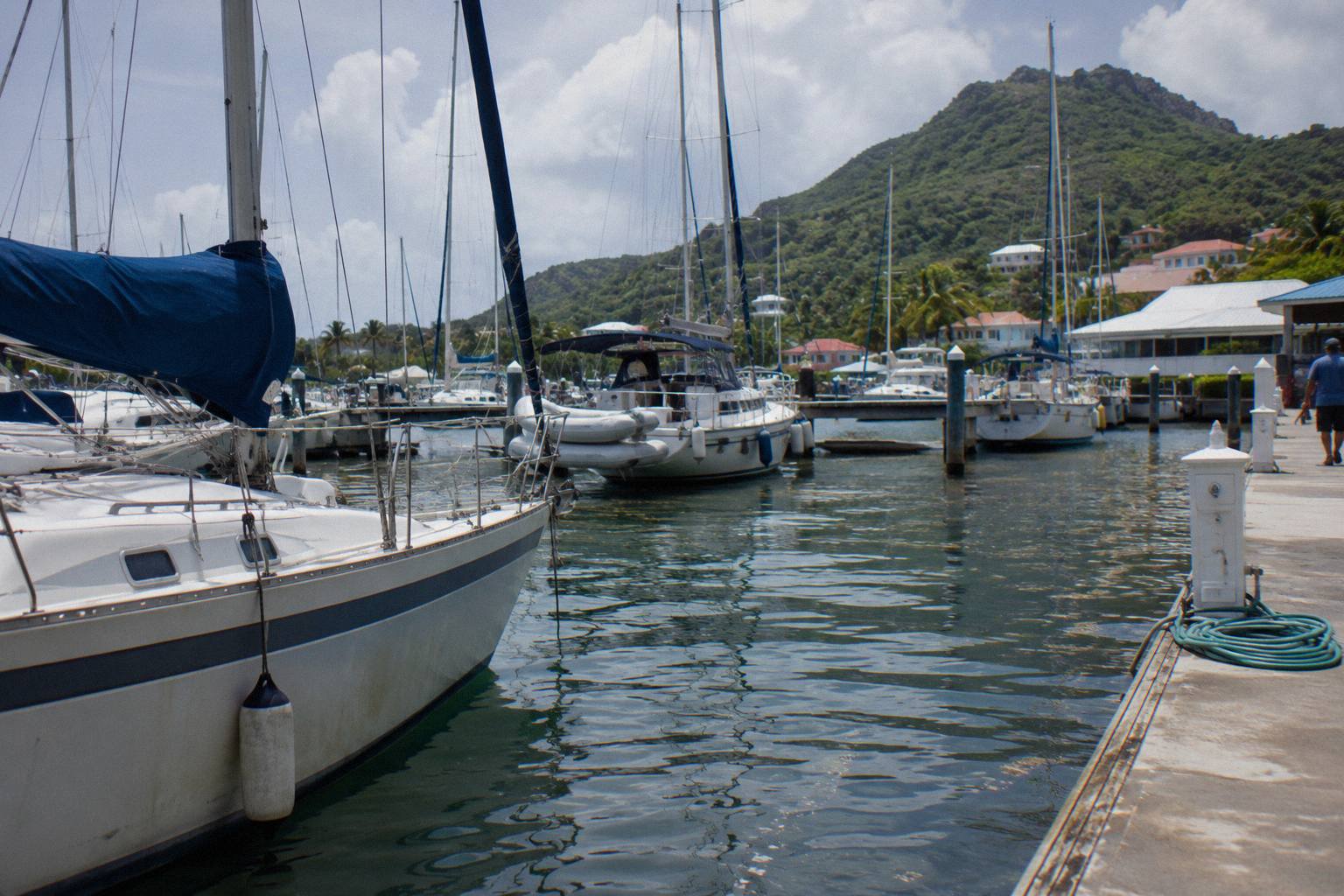
Rodney Bay Marina is the workhorse departure point of the west coast route. Per the booking data, Julian Boat Tours meets at the marina and the ferry dock, Marlan's shared day meets at the marina next to the Marketplace grocery, Infinity Tours meets at the marina, and the Sea Spray catamaran days sail from there with pickup from selected hotels only. The private Marlan's day and the Sea Spray Rum And Chocolate Day also run from the marina. If you are staying in the Gros Islet or Rodney Bay area, that concentration is convenient: several competing operators leave from the same stretch of dock.
Castries is the alternative. Port Castries holds two cruise complexes, Pointe Seraphine with dedicated cruise berths and La Place Carenage near the Queen Elizabeth II docks, and in the October to April cruise season up to five ships can call in a single day. The Sea Spray cruise-ship catamaran day picks up and drops off at the cruise port; Captain Cliff's private boats leave from the dock opposite the police station and the ferry dock with port pickup; Cool Vibes offers port pickup alongside hotel, resort and villa pickup. The full picture of departure points looks like this:
| Tour | Departure or pickup per the booking data |
|---|---|
| Julian Boat Tours All-Inclusive | Rodney Bay Marina and ferry dock meeting points |
| Marlan's Boat Tours Sea And Land Day | Rodney Bay Marina, next to Marketplace grocery |
| Infinity Tours Sea And Land Volcano Snorkel | Rodney Bay Marina |
| Sea Spray Full-Day Catamaran | Rodney Bay Marina, selected-hotel pickup |
| Sea Spray Tet Paul Hike Day | Rodney Bay Marina, selected-hotel pickup |
| Sea Spray Cruise-Ship Catamaran Day | Castries cruise port pickup and drop-off |
| Barefoot Holidays Catamaran Day Sail | Castries or Rodney Bay, north-island hotels only |
| Edmund Tours Land And Sea Day | Hotel or port pickup for everyone, Gros Islet based |
| St Lucia Taxi Service Van Day | Hotel and cruise-port pickup and drop-off |
| The Real Deal Private Day | Castries or Rodney Bay area, pickup for everyone |
| Captain Cliff private days | Castries ferry dock area, port pickup |
| Golden Dream Private Boat Charter | Rodney Bay area |
Where you start shapes the day. A marina departure puts you on the water immediately with the whole coast ahead of you. A Castries departure is the natural fit for cruise passengers, and the question of whether a land and sea tour gets you back to the ship on time is worth reading before you commit, since no operator publishes a firm return time. The Safi and Lucian Adventures listings state no pickup details; ask the operator.
Three of the route's strongest options, one private and two shared, give a feel for the spread:
The Real Deal day is the private benchmark: a boat for up to 8 guests rated 5.0 from 110 reviews, from US$537 with the booking page showing what the price covers for your party. The Sea Spray catamaran, 4.6 from 708 reviews at from US$145 per person, is the big-deck shared version of the same coast.
What Does The Sea Leg Pass: Marigot Bay, Anse La Raye And Canaries?
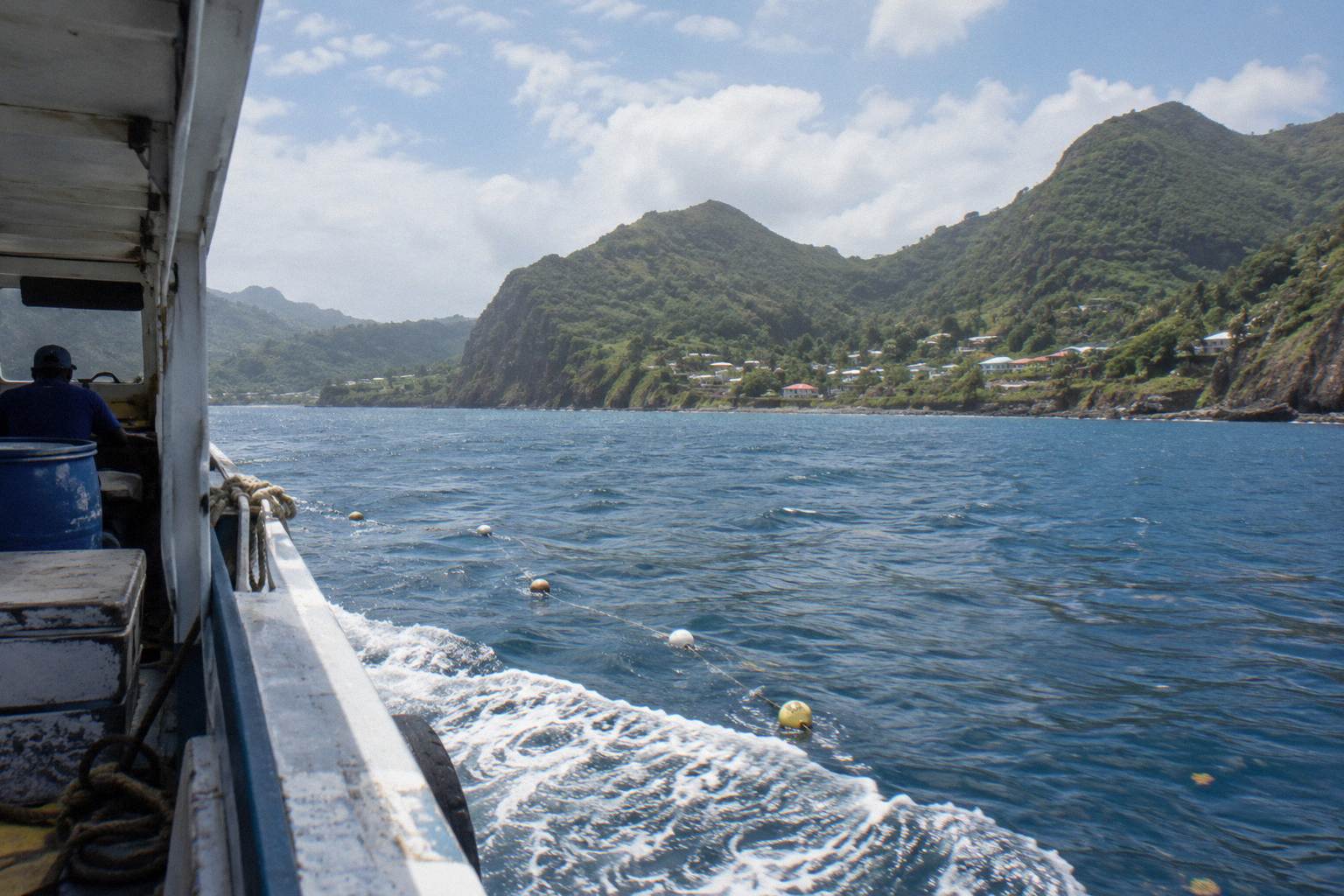
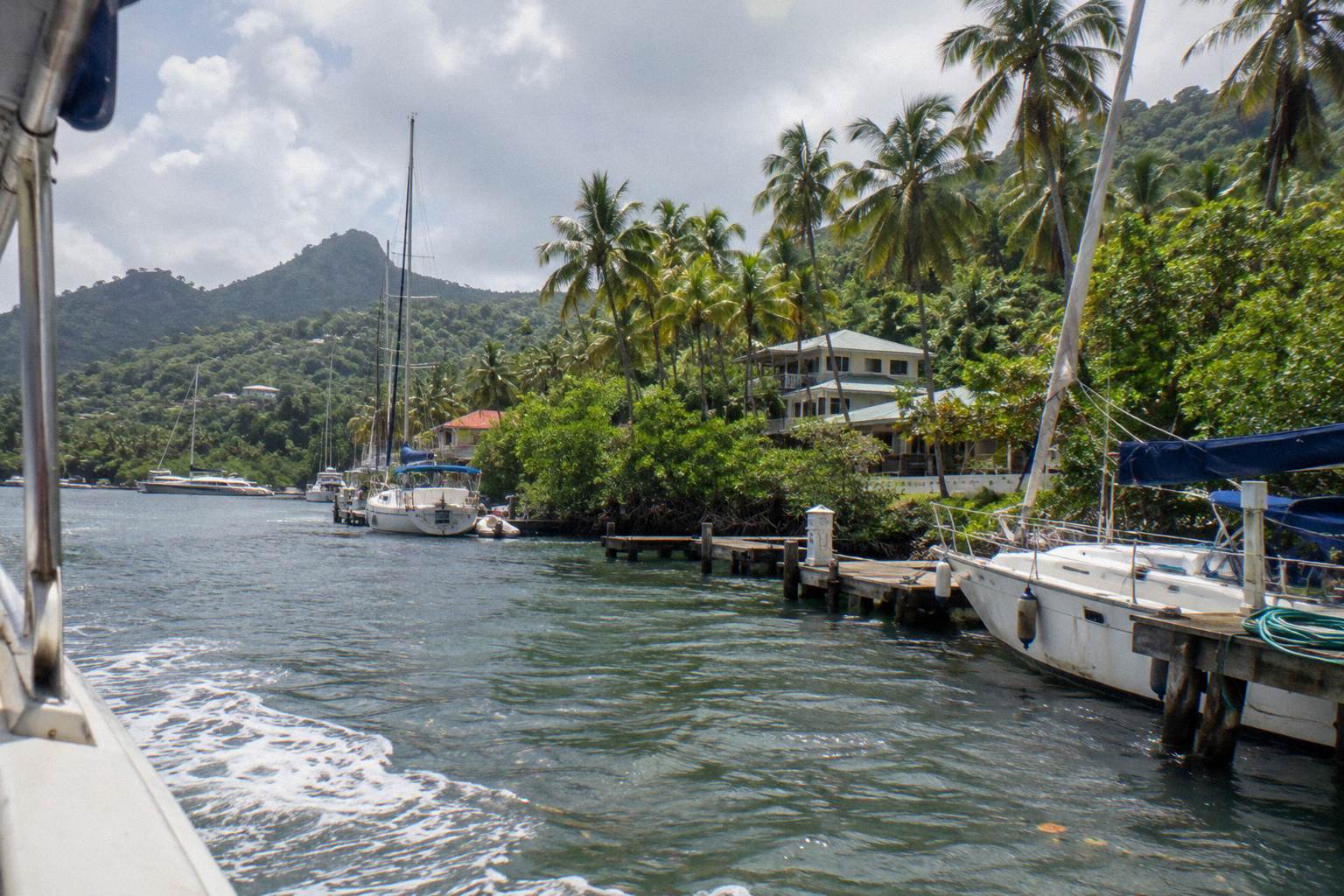
The sea leg passes Marigot Bay, which the Tourism Authority calls 'one of the most beautiful bays in the Caribbean', then the fishing village of Canaries between Anse La Raye and Soufriere; the Real Deal line specifically lists its boat passing Marigot Bay, Anse La Raye and Canaries without stopping. Most shared tours list a cruise past Marigot Bay only.
Marigot Bay is the name every operator wants on its itinerary, and the Tourism Authority's description, calm waters, a marina and boat excursions, explains why it photographs well from the water. Per the booking data, the cruise past it is listed by the Sea Spray full-day catamaran, the Julian Boat Tours day, the Marlan's shared day and the Barefoot catamaran sail, along with the Tet Paul and Rum And Chocolate variants on the Sea Spray side. It is a cruise-by, not a stop, on those days.
Anse La Raye and Canaries sit further south. Canaries is a fishing village between Anse La Raye and Soufriere that the boats pass, and the official sources say little more about it, so no more is added here. The clearest statement of the full pass-by sequence comes from The Real Deal Boat Tours, whose own site says the private boat passes Marigot Bay, Anse La Raye and Canaries without stopping en route to the snorkel stop at Anse Cochon. If seeing the villages from the water matters to you, that private boat charter to Soufriere approach is the most explicit version of it.
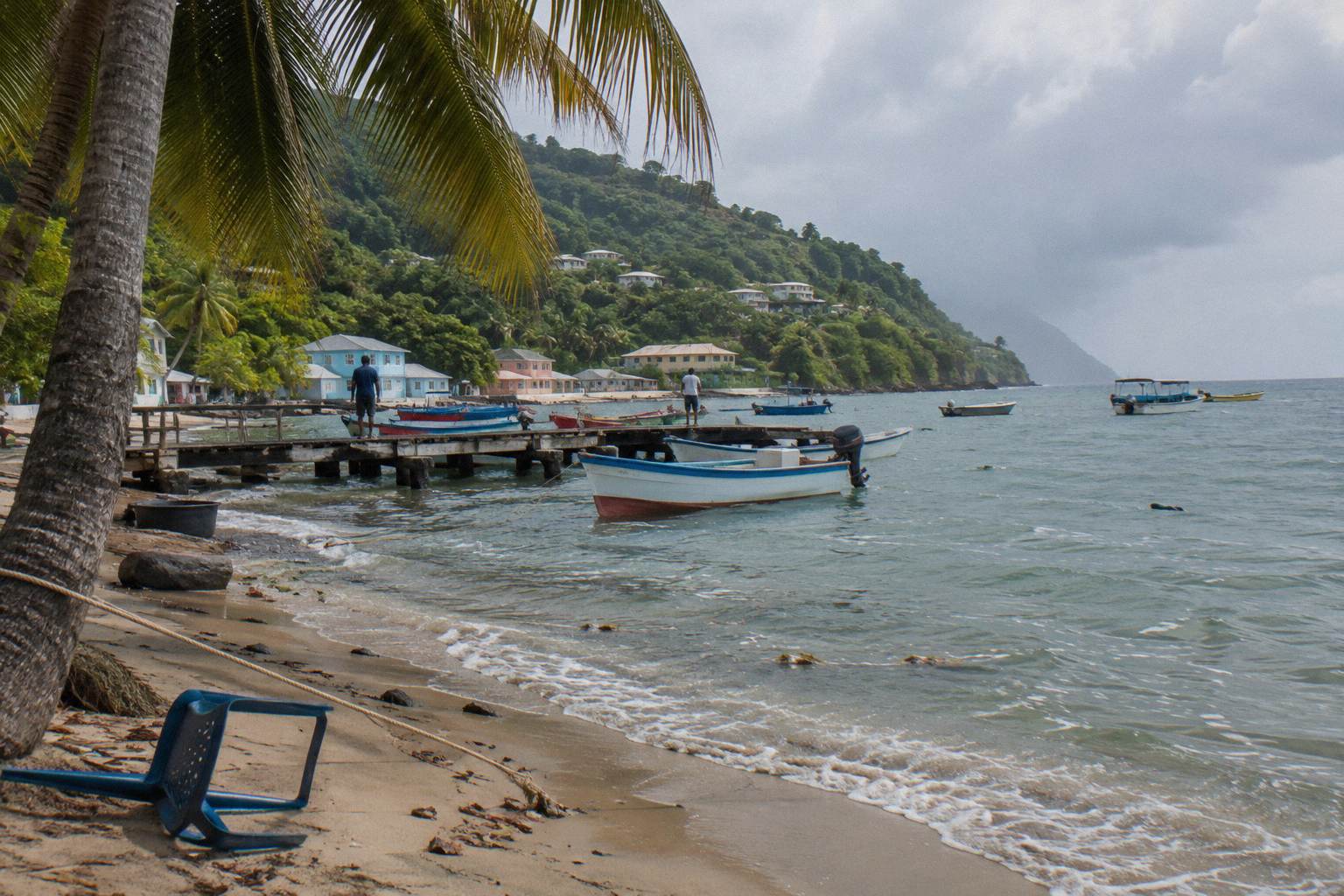
The northbound start of the route has one landmark of its own. The Sea Spray Tet Paul Hike Day's line lists a run down the west coast past Pigeon Island, the National Landmark run by the Saint Lucia National Trust, before the Pitons and Marigot Bay; the sources give no hours or entry fee for it, so treat it purely as a name the boat passes. Soufriere itself is covered in detail by the Saint Lucia Tourism Authority's Soufriere pages, the primary source for everything on this coast.
Which tours list which pass-bys and snorkel stops, straight from the booking data:
| Tour | Marigot Bay cruise-by | Snorkel or swim stop listed |
|---|---|---|
| Sea Spray Full-Day Catamaran | Listed | Swim at Anse Cochon |
| Julian Boat Tours All-Inclusive | Listed | Sugar Beach |
| Marlan's Sea And Land Day | Listed | A snorkel stop on the boat leg |
| Barefoot Catamaran Day Sail | Listed (Soufriere sail) | Anse Cochon |
| The Real Deal Private Day | Passed with Anse La Raye and Canaries | Anse Cochon |
| Sea Spray Tet Paul Hike Day | Listed | Snorkel equipment carried, stop per the day's plan |
| Edmund Tours Land And Sea Day | Not listed as a pass-by | Boat ride to Sugar Beach |
| Sea Spray Cruise-Ship Catamaran | Listed | Marine reserve snorkelling |
If your interest in the route is mostly about the water rather than the driving, the snorkelling stops on a land and sea day compares Sugar Beach, Anse Cochon and Anse Chastanet in depth, and the catamaran, speedboat or small boat choice covers how the vessel changes the same stretch of coast.
Where Do The Pitons Appear On The Route?
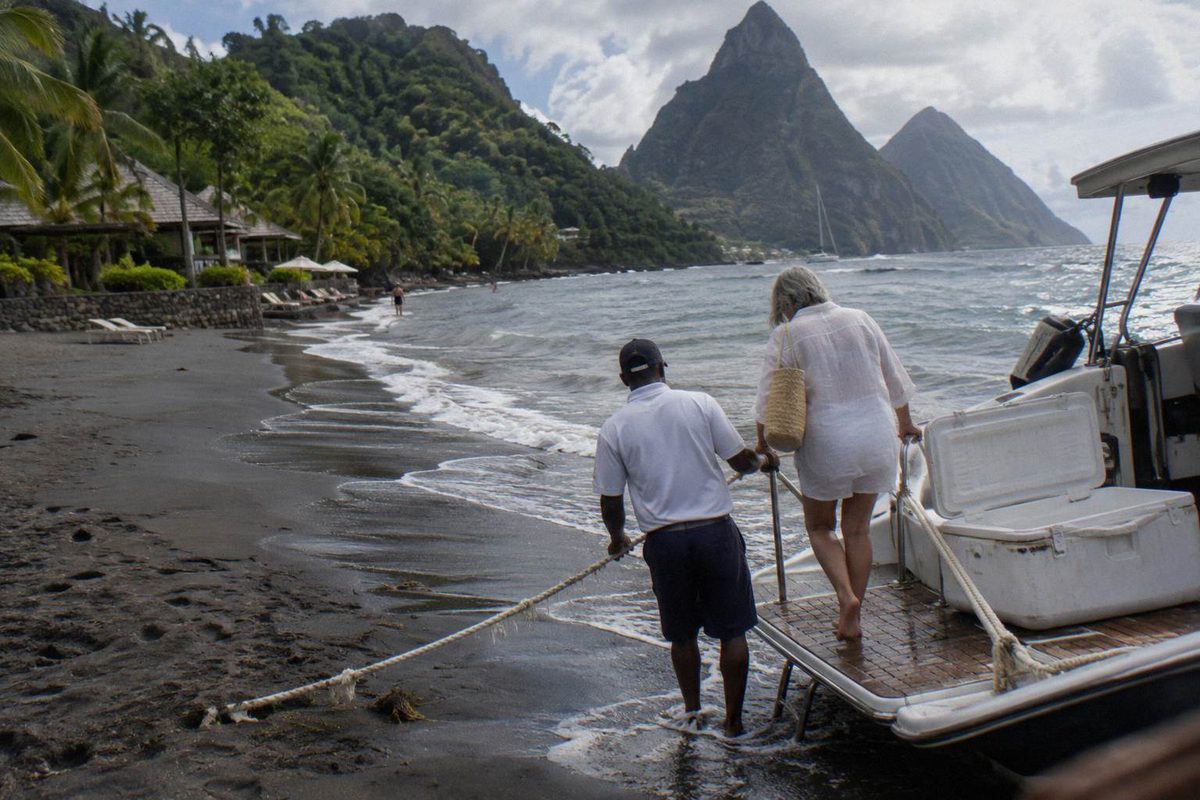
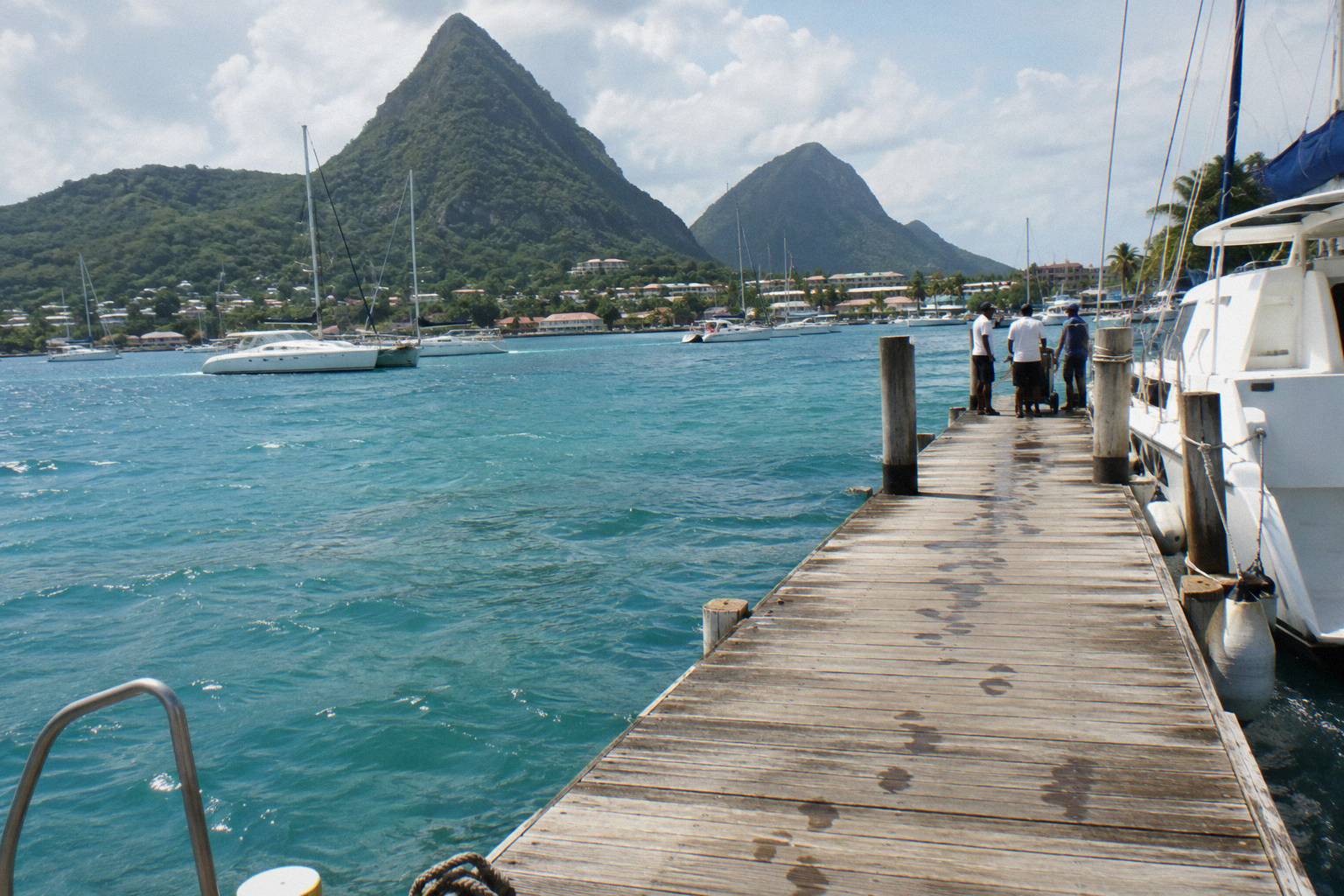
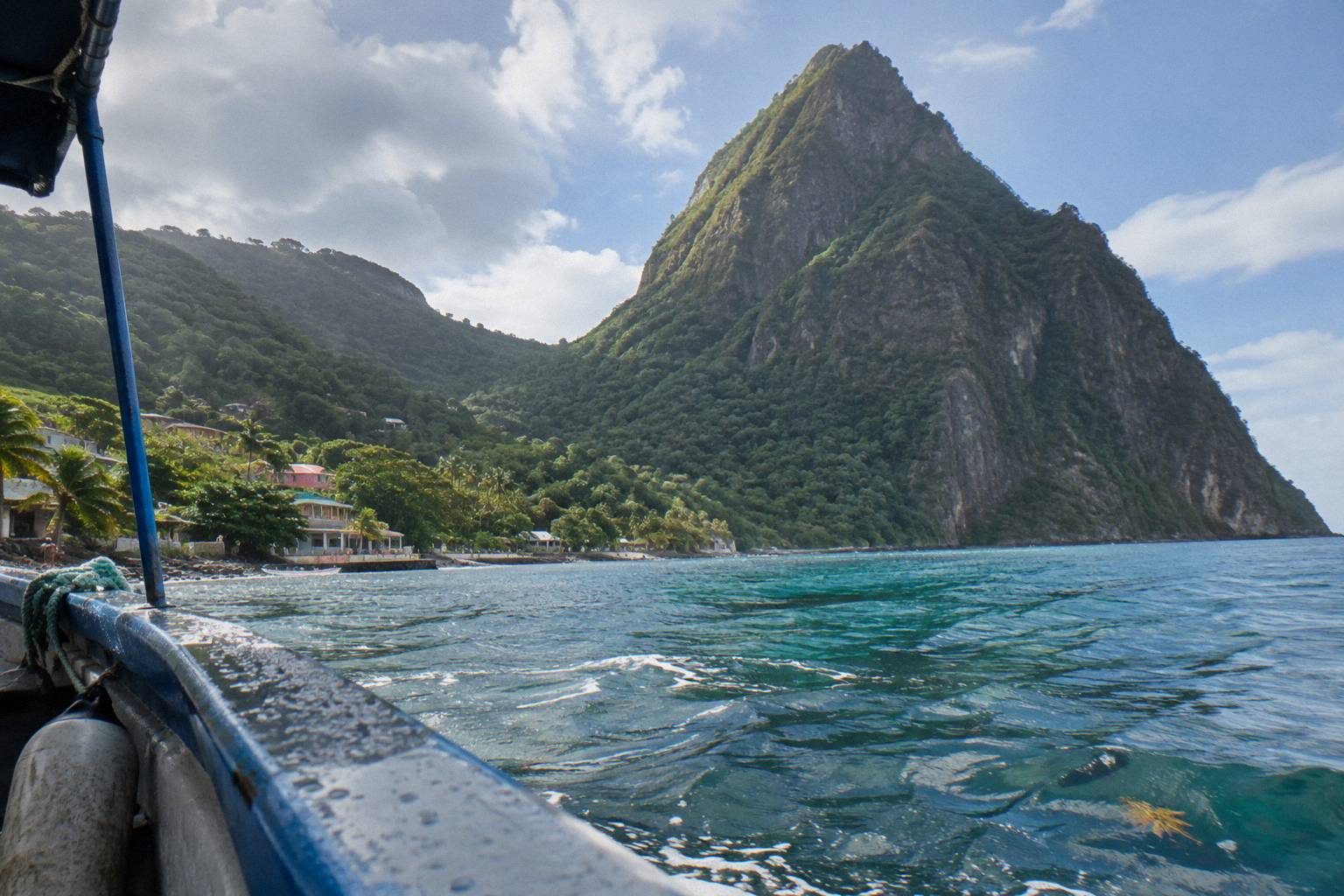
The Pitons appear on the Soufriere coast as the boat approaches from the north: Gros Piton at 798 m and Petit Piton at 743 m, part of the Pitons Management Area, a UNESCO World Heritage Site inscribed in 2004. From the water they rise from the sea directly ahead; no tour can promise a clear view or a photo, though the Edmund line lists photos with the Pitons as a stop.
The Tourism Authority gives the figures: Gros Piton 798 m, or 2,619 ft, and Petit Piton 743 m, or 2,438 ft. The Pitons Management Area was inscribed by UNESCO in 2004, and the authority presents the pair as rising from the sea on the Soufriere coast. For most travelers this approach is the single moment they booked the day for, the point where the boat's heading, the coastline and the two peaks all line up.
What the tours actually promise varies, and the differences matter. The Edmund Tours line lists photos with the Pitons as an explicit stop on the day. The Island Routes line lists a snorkel over a protected reef near the Pitons. Everyone else offers the approach and the view as part of the run south, which is real but no promise of conditions. Climbing either peak is a separate undertaking altogether and outside what any of these day tours do.
The Edmund day is the most-reviewed tour running this coast, 4.7 from 2,085 reviews, from US$125 per person, with a boat ride to Sugar Beach for snorkelling and swimming, the bat cave, an air-conditioned vehicle, lunch, soda and alcoholic beverages, snorkelling equipment and all fees and taxes, up to 15 travelers per booking. It is the volume choice for the route, and the one most hotel guests in the north end up on.
What Happens Once You Arrive In Soufriere?
Arrival in Soufriere means swapping the sea leg for land: the booking data across the listed tours points to Sulphur Springs, which the Tourism Authority calls 'the Caribbean's only drive-in volcano', Toraille Waterfall, described as cascading from a cliff into a cool natural pool, and a local lunch. Which stops your day actually includes depends entirely on which tour line you read.
Sulphur Springs sits near Soufriere, and visitors drive into the geothermal zone to see bubbling mud pools and steaming vents. For the mud baths you cover yourself in volcanic mud, then rinse in warm spring water. The park's Interpretation Centre offers a short guided route, and the Tourism Authority suggests morning or late afternoon visits with comfortable shoes, swimwear and a towel. The wording to trust is 'the Caribbean's only drive-in volcano', the authority's own; no entry fee or hours are published here because the sources do not carry them. The Sulphur Springs stop guide takes the volcano leg in full.
Toraille Waterfall, in the authority's words, is 'a lush waterfall cascading from a cliff into a cool natural pool' with easy access. A small per-person entry fee is often paid separately on the day, and only the tours whose lines list a waterfall fee as not included say so plainly. Diamond Falls Botanical Gardens, fed by geothermal springs with mineral baths 'once used by French troops' and falls known for changing hues from mineral deposits, is open every day of the year, but among these tours only the Island Routes line lists the botanical gardens. The gardens' official tourism listing is the place to check details.
The land stops by tour, exactly as the booking data lists them:
| Tour | Soufriere land stops listed |
|---|---|
| Edmund Tours Day | Drive-in volcano or Sulphur Springs mud bath, Toraille Waterfall, local lunch, bat cave |
| Julian Boat Tours | Sulphur Springs, Toraille Waterfall, Soufriere viewpoint, lunch |
| Marlan's Sea And Land Day | Mud bath, waterfall massage, local-restaurant lunch |
| Infinity Tours | Volcano or mud bath, waterfall, home-cooked lunch |
| St Lucia Taxi Service Van Day | Banana plantation, drive-in volcano, Toraille, Seashell stop, lunch, Piton beer |
| Sea Spray Full-Day Catamaran | Toraille Waterfall, Sulphur Springs, creole lunch |
| Sea Spray Cruise-Ship Day | Toraille, Sulphur Springs, Morne Coubaril Estate, buffet lunch |
| Island Routes Adventure Cruise | Botanical gardens, sulphur springs dip, history stop, local lunch |
| The Real Deal Private Day | Private taxi in Soufriere; waterfall and mud bath fees paid separately |
| Captain Cliff days | Taxi to volcanic mud bath and waterfall |
Lunch is its own subject, and the creole and plantation kitchen that most of these days end at is covered in the plantation and creole lunch guide, including which lines include it and which leave you paying on the day.
How Does The Return Leg Work?
The return leg runs either back along the same coast by boat or overland by road through the interior, depending on the operator: the booking data shows the taxi-van and private-taxi days returning by road, while the catamaran and shared-boat days list a cruise back north. The Marlan's operator names coastal stops on its return run that its booking page does not, so treat the booking page as the authority.
This is where tour descriptions and booking data most often diverge. The Marlan's shared day is the clearest case: the operator's own site names a return leg with named coastal stops, but the booking page does not describe them, so a reader deciding on that tour should rely on what the booking page lists, a boat leg past Marigot Bay with a snorkel stop, the mud bath, a waterfall massage and lunch, and nothing more specific about the return.
The road return has its own logic. A boat south and a van north means you see the coast once from the water and once from the hills, and the St Lucia Taxi Service day is entirely road-based, a van day with a beach snorkel at Sugar Beach Resort or Anse Chastanet and no boat leg stated at all. Never let anyone sell you that day as a boat tour; the booking page does not state a boat transfer. The differences are laid out in land and sea versus catamaran versus island tour by road.
Weather calls on the day belong to the operator. Sea Spray's own site offers a reschedule or cancellation at no charge on a weather cancellation, an operator-specific policy worth knowing, but no general rule applies across the listed tours. Each tour line carries its own cancellation terms, and the cancellation, weather and late-ship rules guide collects them.
The Julian Boat Tours day is the strong mid-price option on this coast: 4.9 from 498 reviews, from US$175 per person, about five to six hours, with two speedboats carrying a combined maximum of 30 guests, lunch, alcoholic drinks, bottled water, snorkel equipment and all fees and taxes, youngest age 5 by the operator's rule.
When Is The Best Time To Run This Route?
The Tourism Authority's best time to visit Soufriere is December to May, warm and sunny, which is also the island's busiest and driest period, December to April; December to May is likewise described as the calmest and clearest snorkelling season. June to December is the rainy season, with showers usually brief and more rain in the rainforest than on the coast.
The hurricane season runs June 1 to November 30 and overlaps the rainy season, with a 1991 to 2020 average of 14 named storms, 7 hurricanes and 3 major hurricanes per the National Hurricane Center. That does not make those months unvisitable, most storms never touch the island, but it is the reason weather-cancellation terms matter on any boat booking. Average temperatures run 23 to 31 °C year round, and sea temperature typically sits between 26 and 29 °C.
Crowd pressure on the route follows the cruise calendar. In the October to April season up to five ships can call at Castries in a single day, which means the Soufriere land stops share their busiest hours with a large share of those passengers. Travelers sensitive to that should read when to book a land and sea day, season, rain and crowds. The authority also runs a Holiday policy allowing cancellation or rescheduling before arrival at no cost, a national-level policy separate from any tour's own terms.
Private Boat Or Shared Day For This Route?
A private boat buys you the route on your own schedule: The Real Deal runs up to 8 guests from US$537, Captain Cliff's boats of 22, 26 and 31 feet carry 4, 8 and 14 passengers from US$250, while shared days run from US$120 to US$195 per person. Private from-prices cover the party as the booking page states, not per person.
The format choice is really a choice about who controls the stops. On a shared day, the itinerary is fixed: the marina departure, the cruise past Marigot Bay, the snorkel stop, the mud bath, lunch, the return. On a private boat, the sequence flexes around your group, subject to sea conditions and the operator's judgment, and the Real Deal line's pass-by list of Marigot Bay, Anse La Raye and Canaries is a good example of what a private skipper can narrate on the way south.
Read the not-included columns carefully on the private side. The Real Deal day includes beverages on board, snorkel gear and an air-conditioned vehicle, but lunch and the waterfall and mud bath fees are paid separately on the day. The Captain Cliff private boat day includes docking fees, port pickup and drinks, but lunch runs about US$15 per person with Sulphur Springs and waterfall fees, gratuities and a fuel surcharge collected on the day. The Captain Cliff all-inclusive day folds entrance fees, marine reserve snorkelling fees, lunch, drinks, a local guide and the Soufriere taxi into the price, 5.0 from 51 reviews, from US$250. The full trade-off is argued in private or shared land and sea day.
A quick format comparison across the route:
| Format | Example tour | From price | Duration | Cancellation |
|---|---|---|---|---|
| Private boat | The Real Deal, 5.0 from 110 reviews | US$537 | 5 hours 30 minutes | Free, 24 hours before |
| Private speedboat | Captain Cliff All-Inclusive, 5.0 from 51 reviews | US$250 | 4 to 6 hours | Free, 24 hours before |
| Full-day catamaran | Sea Spray, 4.6 from 708 reviews | US$145 per person | 8 hours | Free, 24 hours before |
| Small-group speedboats | Julian, 4.9 from 498 reviews | US$175 per person | 5 to 6 hours | Free, 24 hours before |
| Road tour with beach snorkel | St Lucia Taxi Service, 4.7 from 28 reviews | US$120 per person | 6 hours | Free, 24 hours before |
The Sea Spray full-day catamaran remains the reference shared version of the whole route, 8 hours from Rodney Bay Marina with live commentary, a swim at Anse Cochon, the cruise past Marigot Bay, Toraille, Sulphur Springs and a creole lunch, drinks and all taxes and fees included, gratuities not.
Money on the day is straightforward: the Eastern Caribbean dollar is pegged at EC$2.70 to US$1, US dollars are widely accepted, and change often comes back in EC dollars. Tipping is customary at about 10 to 12 percent and is not automatically added to most bills, but no crew-tip figure for a land-and-sea day is published. The tips and extra costs guide works through what to budget beyond the ticket.
Common Questions About The West Coast Route
What Does The West Coast Boat Route To Soufriere Pass?
The route runs from Rodney Bay Marina or Castries south along the sheltered Caribbean coast, past Marigot Bay, Anse La Raye and Canaries, to the Pitons coast and Soufriere. The Real Deal line lists its private boat passing all three of those places without stopping; shared tours mostly list a cruise past Marigot Bay plus a snorkel or swim stop.
Which Tours Leave From Rodney Bay Marina?
The Julian, Marlan's shared, Infinity, Sea Spray full-day, Sea Spray Tet Paul, Sea Spray Rum And Chocolate and private Marlan's days all meet or depart at Rodney Bay Marina per their booking data. Barefoot sails from Castries or Rodney Bay, and the cruise-ship and Captain Cliff days use the Castries waterfront.
Can You See The Pitons From The Boat?
The Pitons, Gros Piton at 798 m and Petit Piton at 743 m, appear on the Soufriere coast as the boat approaches. No tour can promise a clear view, though the Edmund line lists photos with the Pitons as a stop and the Island Routes line lists a snorkel over a protected reef near them.
Do You Return By Boat Or By Road?
It depends on the operator. Catamaran and shared-boat days list a cruise back north; the taxi-van and private-taxi days return by road. The Marlan's operator names return-leg coastal stops its booking page does not, so rely on the booking page for what the day includes.
How Much Does A West Coast Land And Sea Day Cost?
Shared days run from US$120 to US$195 per person across the listed trips, from US$125 for the Edmund day to US$195 for the Sea Spray Rum And Chocolate Day. Private boats start at from US$250, with the price covering the party as the booking page states rather than per person.
When Is The Best Time To Do The Route?
The Tourism Authority's best time to visit Soufriere is December to May, warm and sunny, and the calmest, clearest snorkelling season is described as December to May too. June to December is the rainy season with usually brief showers, and hurricane season runs June 1 to November 30.